BC Fishing Regulations: 6 Things You Need to Know + NEW for 2026
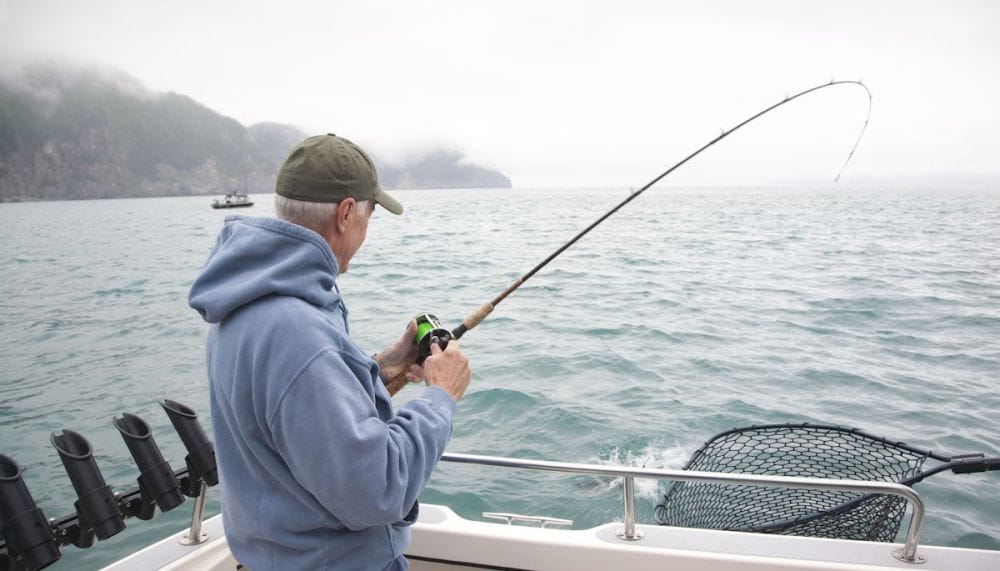
A Complete Overview of BC Fishing Regulations on the Ocean
The west coast of Canada is a fishing enthusiast’s paradise, and we all want to keep it that way. That’s why BC fishing regulations are designed to ensure that the resident species can be fished without being depleted too quickly.
While fishing regulations may seem inconvenient to some, they act as on-paper stewardship for the marine ecosystem, ensuring fish populations remain strong for generations to come.
Read on to learn 6 things you should know before saltwater fishing on the west coast, including the saltwater fishing regulations BC enforces, licensing rules and the types of fish found in British Columbia’s coastal waters.
New Regulations for 2026
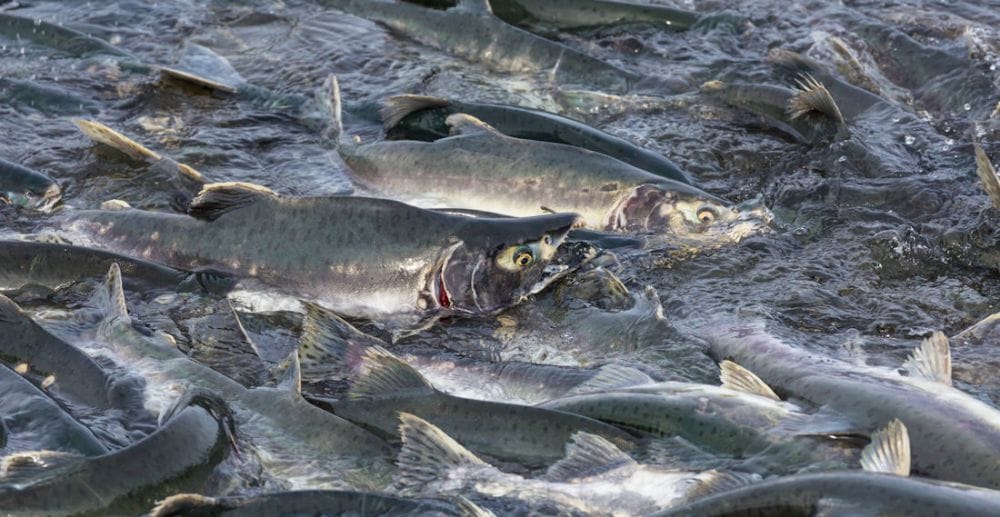
Many rules and regulations have changed in the past couple of years. The 2025-2027 BC Freshwater Fishing Regulations Synopsis was released with plenty of new info, and some catch restrictions and saltwater regulations have been updated. Here are some notable changes:
1. Prohibition on Certain Hooks
As of September 1st, 2026, treble hooks (the ones with three individual hook points) are now prohibited when fishing for all salmon in BC tidal waters. Anglers must stick with single hooks from now on, with a maximum hook gap of 22mm. You can still run a tandem single hook setup, provided the hooks comply with size limits.
2. Chinook Rule Changes
Chinook Salmon rules changed in July 2026 for the Vancouver Island marina areas. In order to protect at-risk Fraser River stocks, the daily Chinook limit is now zero in most of Areas 11-20. Certain subareas (like 11, 111, 12-14) are still allowed two per day at 45cm minimum size. Other subareas have seen maximum retained size limits reduced from 80 to 75cm. Be sure to keep an eye on precise area regulations when out on the water.
3. Halibut Rule Changes
Recreational halibut season reopened on April 1st, 2026, with some new rules. Effective September 1st, the daily limit has doubled to 2 halibut per day, provided you haven’t yet exceeded the annual limit of 10 halibut per person. Just watch for the size – you cannot retain a halibut greater than 112cm (head on) or 85cm (head off).
4. Freshwater Licensing System
The BC Government made a change in the freshwater licensing system, which took effect on April 1st, 2026. The old E-licensing platform and traditional angler numbers have been put to bed. Instead, we’ve transitioned to the Wildlife Information and Licensing Data (WILD) System, and anglers must now register to get their Fish and Wildlife ID (FWID). For the first time, fishing and hunting licenses are available through the same system! That means if you’re already a hunter, you already have a FWID.
5. Further Killer Whale Protection Measures
The Government of Canada announced stronger protections for Southern Resident killer whales in 2026. In southern BC coastal waters (between Campbell River and north of Ucluelet), boats must now give southern residents at least 1,000m of distance. You can maintain the standard 200m for Bigg’s, transient killer whales, other whales and porpoises. But that’s if you can correctly identify the difference. It’s best to give 1,000m in all scenarios.
In addition, the government has banned fishing and navigation and placed more stringent speed restrictions around certain areas to protect the whales. For example, navigation and fishing are banned around Saturna Island and Pender Island from June 1st – Nov. 30th, 2026.
6 Things to Know About Saltwater Fishing in BC
Even frequent anglers can’t be expected to remember all the fishing regulations for British Columbia. So, it’s always good to refresh your knowledge before going out on a fishing trip, especially for a species with which you are less familiar.
As a starting point, here are five things you should know before saltwater fishing in BC.
1. BC Saltwater Fish Species
BC’s coastal waters are home to a wide variety of saltwater fish species, including some considered “anadromous,” meaning that they spend part of their lifecycle in the ocean and in freshwater.
While fishing species like halibut, ling cod, albacore tuna and any of the 5 types of salmon are among the most popular to fish, there are many species that anglers are likely to come into contact with in the oceans off BC’s west coast.
This Department of Fisheries and Oceans fish identifier list for the Pacific region details the fish found in the area and how to identify them.
2. Fishing Licensing Rules in BC
By law, anyone who wishes to go fishing in British Columbia must have the correct license. To catch any species of shellfish or finfish, you will need a BC Tidal Waters Sport Fishing License.
It is useful to know the following regulations connected to the use of a BC Tidal Waters Sport Fishing license:
- The license is not transferable.
- The license must be carried when fishing and produced on request by conservation officers, fishery officers or guardians.
- All retained halibut and chinook caught in a Management Area must be recorded on the license.
- All retained ling cod caught in waters off the eastern coast and southern tip of Vancouver Island (Management areas 12-19 plus 20-5 to 20-7, and 29-5) must be recorded on the license.
- BC salmon fishing regulations state that anyone intending to catch and retain any species of Salmon must have a Salmon Conservation Stamp in addition to their BC Tidal Waters Sport Fishing License. However, the stamp is optional if the angler intends to release all Salmon caught.
3. License Types and Fees
There are various saltwater fishing license options available depending on how often you plan to go ocean fishing. You must choose a non-resident license if you are not a resident of Canada.
You can find details of the types of licenses available, their associated fees, and an online license application here.
Note: Although children under 16 require a tidal water fishing license, it is free.
4. Saltwater Fishing Gear Restrictions
Since saltwater fishing often goes beyond the simple fishing rod and hook gear selection, there are regulations in place to specify and restrict how much and what kind of gear may be used in catching saltwater fish.
Looking for a new fishing boat? Read more about the best boats for fishing.
Below is a quick breakdown of the restrictions and allowances surrounding the use of particular gear.
General
- Gear restrictions and allowances are subject to change mid-season.
- You can use multiple rods in coastal tidal waters, but only one rod is allowed when fishing in BC’s tidal rivers.
- You may not use a sinker weighing more than 1 kg unless you use a downrigger line. In this case, the fishing line must be attached to the downrigger with a release clip.
- A gillnet for smelt fishing may be at most 7.5 meters, with a mesh size between 25 mm and 50 mm.
- Only one gillnet may be used at one time and must have a buoy with the owner’s details clearly marked on it.
- If you use a dipnet to catch mackerel, smelt, sand lance, sardines or anchovies, it must measure at most 90 cm, with a bag no longer than 1.5 times that measurement.
Hooks
- Barbed hooks, including triple-barbed hooks, may be used for all finfish except salmon and trout.
- Barbless hooks must be used when fishing in the tidal waters of BC rivers.
- Your line may only have one hook except for:
- Multiple hooks may attach a piece of bait to the line, provided they aren’t intended to catch more than one fish.
- Multiple hooks may catch mackerel, herring, anchovy, Pacific Sand Lance or Pacific Sardine.
Using Fish as Bait
- Fish suitable for human consumption may not be used as bait in sport fishing.
- Fish offal, mackerel, sardines, or herring may be used when baiting traps.
5. Be Aware of Daily Catch Limits
Catch limits protect local fish populations while allowing anglers to retain something from their catch. Because some fish species have healthier populations than others, daily limits for saltwater fishing in BC vary according to the species and the Management Area you are fishing in.
Always research daily catch limits for the area you are fishing in before setting off and remember to record all halibut, chinook and lingcod catches on your license.
6. Reporting Your Catch
To monitor the impact of recreational fishing on the species found in BC’s oceans, DFO requires any BC Tidal Water Sports Fishing license holder aged over 16 to report their complete catch, whether retained or not, for a fixed period.
For example, an annual license holder will be asked to report all catches for one specific month, indicated on their license.
Participation in this recreational monitoring program is mandatory and a condition of being granted a license.
Fishing Boats For Sale – In Stock Right Now
Our yacht and fishing boats for sale listings are always being updated. Here are a couple of fall fishing boats we’re featuring right now:
Parker Poland 920 Explorer Max
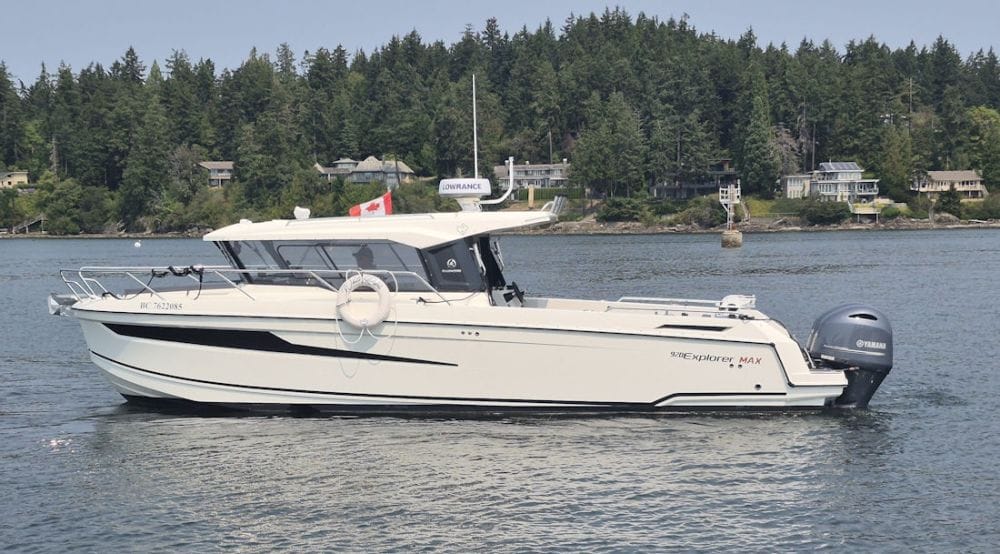
This 30-ft 2021 model is one of Europe’s most versatile and capable pilothouse cruisers. It can be used for family cruising or a serious fishing trip, with twin F200 four-stroke outboards and an ideal cockpit layout for offshore fishing.
Price: $269,500 CAD
Learn more: 2021 Parker Poland 920 Explorer Max
Riviera 40 Flybridge
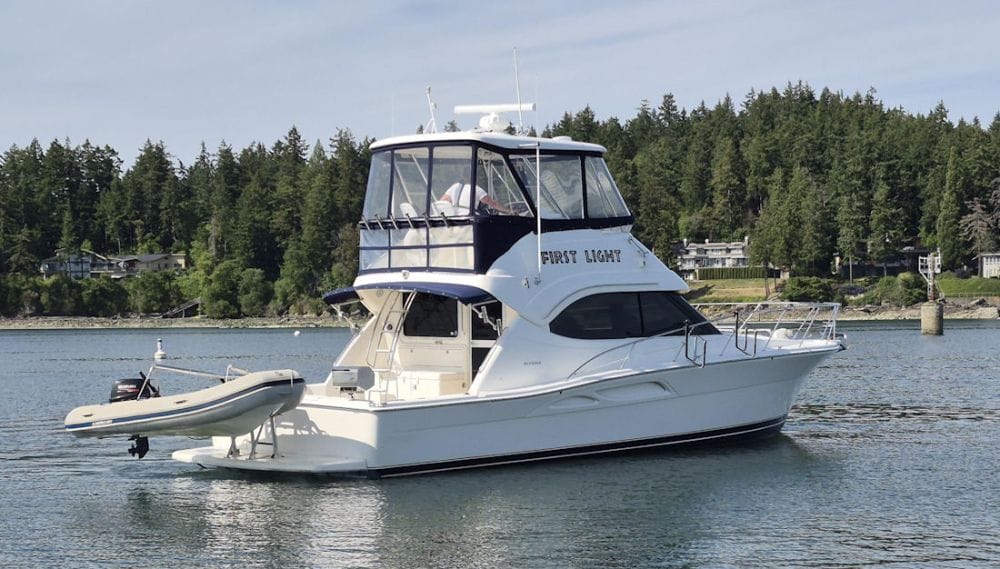
The Australian-built 40-ft Riviera Flybridge is another capable offshore fishing model with an open teak cockpit, live bait tanks and a tackle station. We’ve got a 2001 model in stock with a brand-new upper flybridge enclosure that was just price reduced by $20K.
Price: $299,900
Learn more: 2001 Riviera 40 Flybridge
Get On the Water and Catch the Big One
Now that you know the regulations and licensing requirements, it’s time to get out onto the beautiful west coast ocean and get fishing!
You can easily access the world’s best sport fishing from your southern Vancouver Island base at Van Isle Marina.
Do you need a new fishing boat to get you out to the best fishing spots? Our yacht sales team can help you find the perfect vessel. Contact us today to find out more.
FAQ
Q: Are treble hooks still legal?
A: No, not when salmon fishing in BC tidal waters. It’s now single hooks only with a maximum gap of 22mm, or roughly the size of a nickel.
Q: What Chinook fishing rules have changed?
A: In many Vancouver Island areas, the daily Chinook limit is now zero (most of Areas 11-20). Other subareas have seen maximum retained size limits reduced from 80 to 75cm.
Q: What Halibut fishing rules have changed?
A: Effective September 1st, the daily limit has doubled to 2 halibut per day, provided you haven’t yet exceeded the annual limit of 10 halibut per person. But you cannot retain a halibut greater than 112cm (head on) or 85cm (head off).
Q: What’s all this about the new licensing system?
A: As of April 1st, 2026, the old E-licensing platform and traditional angler numbers have been retired. Instead, we’ve transitioned to the Wildlife Information and Licensing Data (WILD) System, and anglers must now register to get their Fish and Wildlife ID (FWID). For the first time, fishing and hunting licenses are available through the same system.
Contact us to learn more or visit us any time in Sidney

